As the world of interior design evolves, ARRCC Principal Mark Rielly shares his vision for 2026: a move away from fleeting trends and towards interiors that prioritise conscious living, wellbeing, and the enduring beauty of materials.
“In 2026, design is less about novelty and more about orchestrating a considered way of living, where experience, wellbeing and the inherent ageing of materials matter far more than the next fleeting trend,” says Rielly.
Travel, Work and Life Are Interlaced
Rielly describes the sensation of stepping into a resort lobby and feeling the atmosphere gently loosen the tension you carried within. “That moment is never just one thing,” he explains. “It’s the amber dusk settling over the room, the quiet hush of a wool rug beneath, the scent threading through a corridor, and the soft sound of water shaping the atmosphere. All five senses are engaged.”
He notes that hybrid work has blurred the lines between business and leisure travel, exposing people to uniquely designed hospitality destinations around the world. This, he says, has ignited a desire to emulate that calm in the rhythm of home. “Not as imitation, but as a curated narrative shaped by family rituals, culture and art. That is the distinction between decoration and design,” Rielly adds.
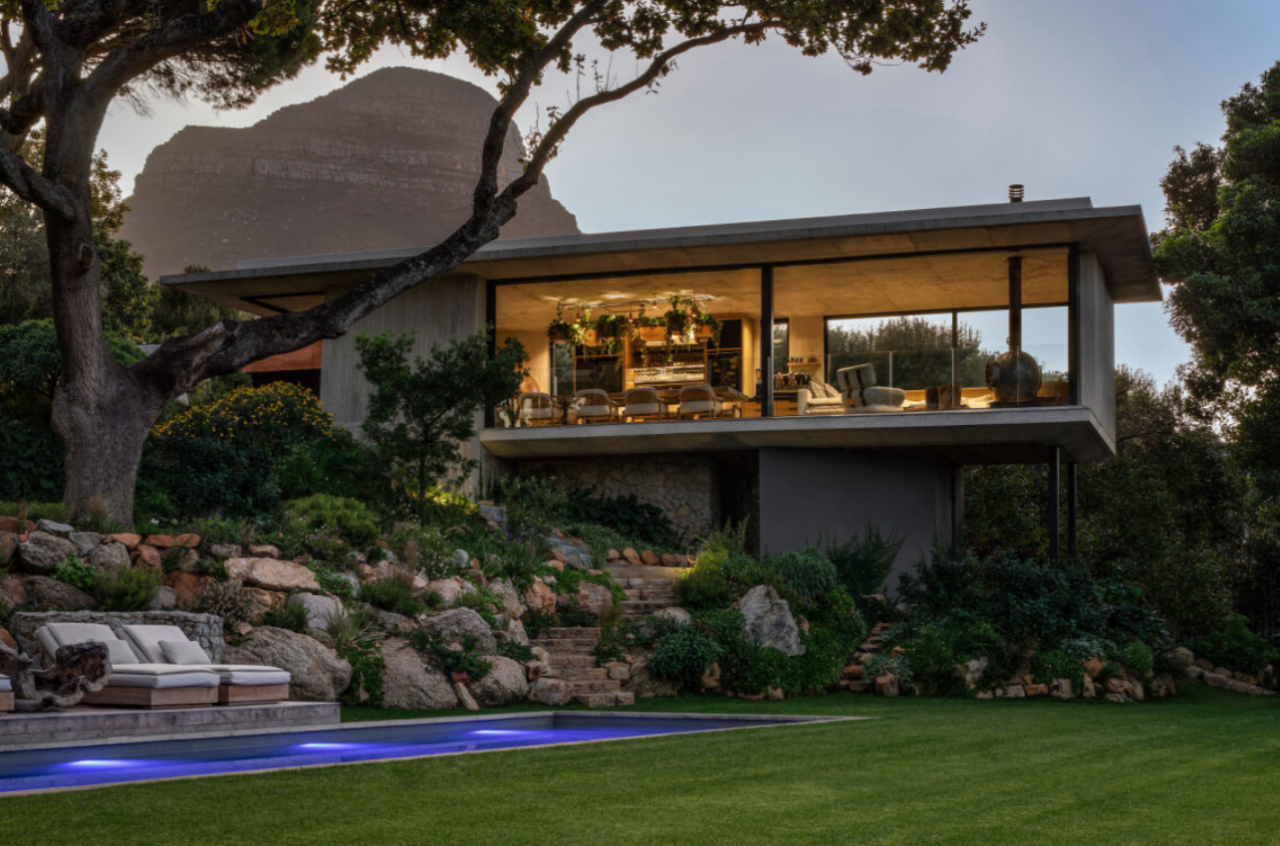
Glen Villa, nestled at the foot of Table Mountain in Cape Town, embodies this philosophy. “Its design harnesses the power of the juxtaposition of contemporary, clean-lined architectural forms and the powerful organic presence of the mountainside, softened by the horizon line of the sea,” Rielly explains.
Materials: Patinaed Beyond the Trend
“Trend-driven materials age quickly both visually and emotionally,” Rielly observes. “Today, people seek longevity, making choices that endure and deepen with time.” He points to timbers elevated into furniture and art, metals left to patinate, and stone that is hand-finished for an artisanal edge, all adding layers of narrative and design authenticity to a home.
He highlights the award-winning Wave Villa as an example: “Light oak panelling softens its iconic roof, exposed concrete adds grit, and Cape Granite anchors the design to its mountainside setting. This isn’t nostalgia; it’s intentionality that grows more elegant with time.”
Colour Palette Follows Place
Rielly notes that Pantone’s colours come and go, but many homeowners now turn to their immediate surroundings for inspiration. “Coastal blues, herbal greens, mineral neutrals create the design base and allow curated art to be the exclamation point,” he says. “It’s a theme echoed across high-end design, where personal curation has overtaken prescriptive minimalism.”

Three Non-Negotiables for 2026
Rielly identifies three essential elements for interiors in 2026:
- Light Attuned to Life:“One design element that greatly influences our experience of a space, shapes our mood, rest and performance, is light. Circadian-attuned lighting, with more orange and warm tones, helps support the body’s internal clock. In practice, that means layered scenes, adaptive settings, and the confidence to design for darkness where it serves rest.”
- Considered Provenance:“Conscious design is no longer a footnote. People consider how their choices impact their home and the wider environment. They expect more responsible sourcing and meaningful collaboration with local artisans who understand material, climate and culture.”
- Psychology of Connection:“Spaces must support mental wellbeing. That means layouts that respect privacy and gathering, tactility that soothes, biophilic cues that lower the heart rate, and personalisation that narrates a life well lived. Interiors are the most intimate expression of identity, and they must be considered.”
“These considerations lean into self-expression and timeless craft rather than copy-paste aesthetics,” Rielly concludes. “In the end, design is not a mood board; it’s a life, and environment that is shaped. 2026 asks us to design for spaces that adapt, awaken all our senses, patinate, and keep earning their welcome. That is the design that lasts.”